

2026-11-08
What Are We Bringing Back from the IB Global Conference? Head of Vilnius Campur Gintarė Aldonytė’s Reflections from Lyon
How can we nurture students’ curiosity, support community well-being and use technology meaningfully? Gintarė Aldonytė, Head of the Vilnius Campus at Erudito Lyceum, shares insights from the IB Global Conference in Lyon and reflects on what they mean for everyday school life.
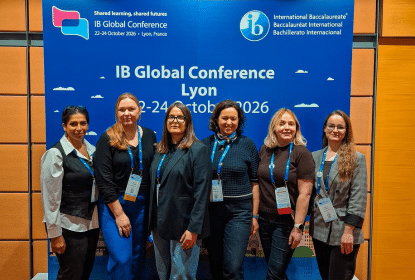
How can we nurture students’ curiosity, strengthen our community and use technology meaningfully? These were among the questions explored by Erudito Lyceum’s leadership and coordinator team at the International Baccalaureate (IB) Global Conference in Lyon.
Gintarė Aldonytė, Head of the Vilnius Campus, shares her reflections and considers what they mean for everyday school life.
Throughout the conference, we each attended different sessions, practical workshops and discussions, covering topics from curriculum planning to community well-being and the school’s long-term vision. Connecting with colleagues from schools around the world gave us an opportunity to see our work in a broader context: to recognise shared challenges, reflect on our direction and discover new ideas.
One of the most valuable insights we brought home was that a school’s impact takes shape through everyday experiences: how students feel about learning, whether they feel confident asking questions, how they collaborate and how they understand their own progress.
Technology and the Teacher–Student Relationship
Artificial intelligence received considerable attention at the conference. The tools presented offered ways to analyse data, plan lessons, adapt tasks to different learning needs and provide feedback more quickly.
Yet discussions about technology’s potential kept bringing us back to human connection. Teachers notice a student’s hesitation, offer encouragement, help them understand difficulties and find motivation. When choosing new tools, we therefore need to ask how they will support learning and create more space for meaningful interaction between teachers and students.
Curiosity Needs Room to Explore and Make Mistakes
Another prominent theme was curiosity and the confidence to learn without always knowing the right answer straight away. We want students to investigate, ask questions and think independently. This requires an environment where mistakes are accepted as part of the learning process.
This idea is closely connected to the IB’s Approaches to Learning (ATL): thinking, research, communication, social and self-management skills. Students need opportunities both to develop these skills and to recognise them in their own learning: to understand how they chose an approach, how they collaborated and what they could do differently next time.
This helps students become more aware of how they learn and makes their progress easier for them to recognise.
Community Well-Being Is Built Every Day
At the conference, well-being was discussed as an integral part of school culture. A sense of belonging grows through everyday communication, mutual trust, clear agreements and access to support.
Conversations about students’ well-being also need to include teachers. To inspire children, we need space to share experiences, try different approaches, discuss challenges and learn from one another. Support among colleagues helps create an environment where everyone feels safe to grow.
A Strong School Is Built Through Collaboration
Sessions on sustainable leadership encouraged us to consider how we retain knowledge and share responsibility within the school. Clear processes, collaborative planning and trust help ensure that valuable experience becomes part of the whole team’s practice.
This is equally relevant to planning teaching and learning. Conversations between subject teachers, coordinators and school leaders help uncover connections across topics and create more meaningful opportunities for student inquiry.
We returned from Lyon recognising many connections with the work already taking place at Erudito Lyceum, alongside a clearer sense of where we can grow next. Our priority now is to discuss these ideas with colleagues and identify those that will enrich our lessons, collaboration and students’ experiences.
Join us
Register for a visit to the school and become part of our community!